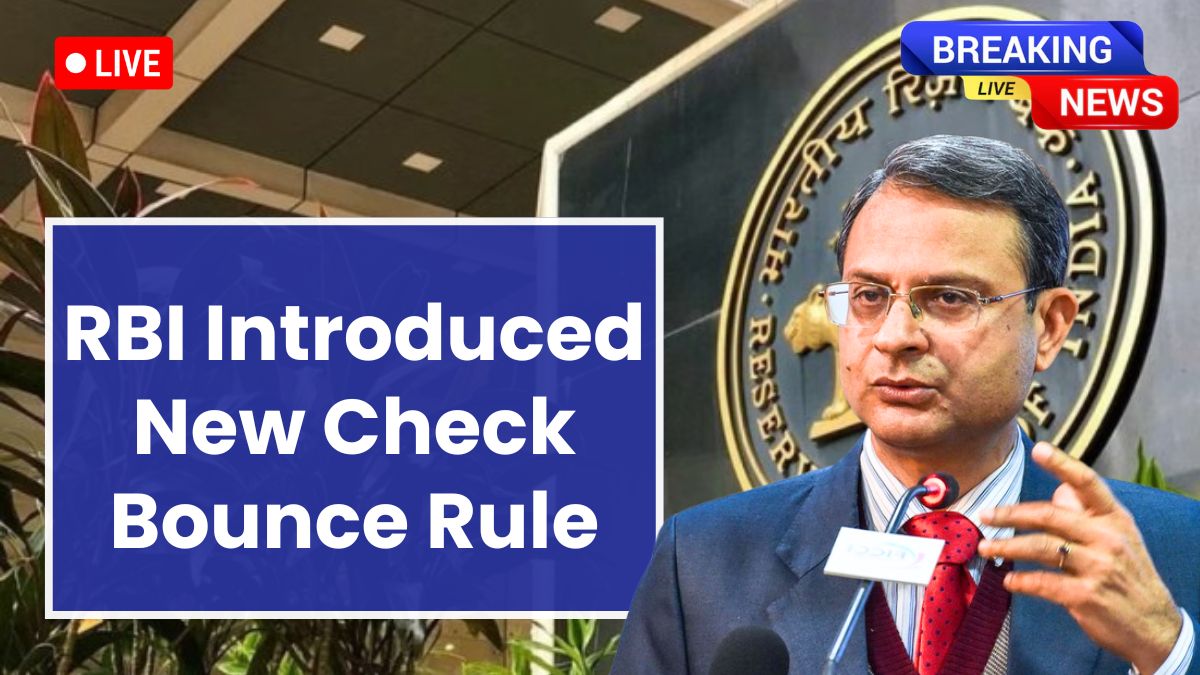
RBI New Check Bounce Rule : The Reserve Bank of India (RBI) keeps updating banking rules to make financial transactions safer and more reliable. Recently, RBI has taken a stricter stance on cheque bounce cases. The main goal behind these changes is simple — people should not issue cheques casually without ensuring they have enough balance. A cheque is a promise of payment, and when that promise fails, it affects trust in the entire system. That’s why the new approach focuses on accountability.
What Is a Cheque Bounce and Why Is It a Serious Issue
A cheque bounce happens when a bank refuses to process a cheque. This usually occurs due to insufficient funds in the account, signature mismatch, overwriting, or technical errors. While some people think it’s just a minor banking issue, it can actually cause financial loss and stress to the person who was supposed to receive the money. In business transactions, a bounced cheque can damage relationships and delay payments. Legally too, cheque bounce is not taken lightly in India.
What the New RBI Check Bounce Update Means
Under the updated approach, RBI has instructed banks to be more alert and strict in dealing with repeated cheque bounce cases. If a customer’s cheques keep getting dishonoured, banks can now take stronger action. This may include closely monitoring the account, restricting cheque book facilities, or even placing temporary limits on certain banking services. The idea is to discourage careless financial behaviour and make customers more responsible before issuing cheques.

Penalty and Additional Charges Can Increase Trouble
Whenever a cheque bounces, banks usually charge a penalty. Under the stricter environment, these penalties are being enforced more firmly. The exact amount may vary from bank to bank, but frequent cheque bounces can lead to repeated charges, which quickly add up. In some cases, banks may also impose extra fees if multiple cheques from the same account are dishonoured within a short period. This sends a clear message that issuing a cheque without proper balance is a costly mistake.
What Happens If Cheques Keep Bouncing
If cheque bounce becomes a habit, the consequences can get more serious. Banks may label such accounts as high-risk. They can issue written warnings and, if the issue continues, may stop issuing new cheque books. Some customers could also face restrictions on using certain banking services. For business owners, this can directly affect daily operations, vendor payments, and credibility in the market. A poor cheque record can quietly damage your financial reputation.
Legal Action Still Applies as Before
Apart from bank penalties, legal consequences remain unchanged. Under the Negotiable Instruments Act, 1881, cheque bounce due to insufficient funds can lead to legal notice from the payee. If payment is not made within the legally allowed time after notice, the matter can go to court. This may result in fines, compensation orders, or even imprisonment in serious cases. RBI’s stricter banking rules do not replace the law — they work alongside it, making the system even tougher on defaulters.
यह भी पढ़े:
 Pension Calculation After 15 Years Service Explained for Employees EPFO Pension 2026 Update
Impact on Businesses and Companies
Businesses are among the biggest users of cheques, especially for supplier payments and large transactions. With stricter monitoring, companies now need to manage their cash flow more carefully. Issuing a cheque without confirming available balance can lead not only to penalties but also loss of trust among partners and vendors. Even a single bounced cheque can make others hesitant to do business with a firm. Financial discipline is becoming more important than ever.
Precautions Every Account Holder Should Take
For regular bank customers, a few simple habits can prevent big problems. Always check your account balance before issuing a cheque. Make sure your signature matches bank records, write the date clearly, and avoid overwriting. Also, remember that cheques have a validity period, so do not issue outdated ones. These small steps can save you from penalties, embarrassment, and legal trouble. Treat every cheque like a formal financial commitment.
A Push Toward Digital Payments
Another indirect outcome of stricter cheque rules is the growing encouragement of digital payments. Methods like UPI, NEFT, IMPS, and net banking complete transactions instantly and do not carry the risk of cheque bounce. While cheques are still used in many sectors, digital payments are faster, trackable, and safer. RBI’s approach suggests that moving toward digital modes can reduce disputes and improve payment reliability across the system.
यह भी पढ़े:
 Big Relief for Elderly Citizens as Government Introduces New Senior Citizen Card Benefits
How the Banking System Benefits from This
Stricter handling of cheque bounce cases helps improve overall discipline in banking. Banks can better identify customers who repeatedly fail to maintain proper balances. This reduces payment disputes and increases trust in financial dealings. When payments are more reliable, business confidence improves, and the financial system becomes stronger. In the long run, such measures help create a more responsible and transparent banking culture.
Conclusion: Responsibility Is the Real Solution
The new direction on cheque bounce sends a strong signal — a cheque is not just a piece of paper, it is a legal promise to pay. Carelessness can now lead to financial penalties, service restrictions, and legal trouble. By being more careful, maintaining sufficient balance, and using safer payment options when possible, people can easily avoid these issues. The aim of these stricter measures is not punishment, but building trust and responsibility in the banking system.
Disclaimer:
This article is for general informational purposes only and is based on publicly discussed banking practices and regulatory trends. Specific penalties, procedures, and bank actions may vary depending on individual bank policies and legal circumstances. Readers should refer to official RBI notifications, bank guidelines, or consult legal and financial professionals for accurate and updated information before taking any decision related to cheque issuance or banking compliance.