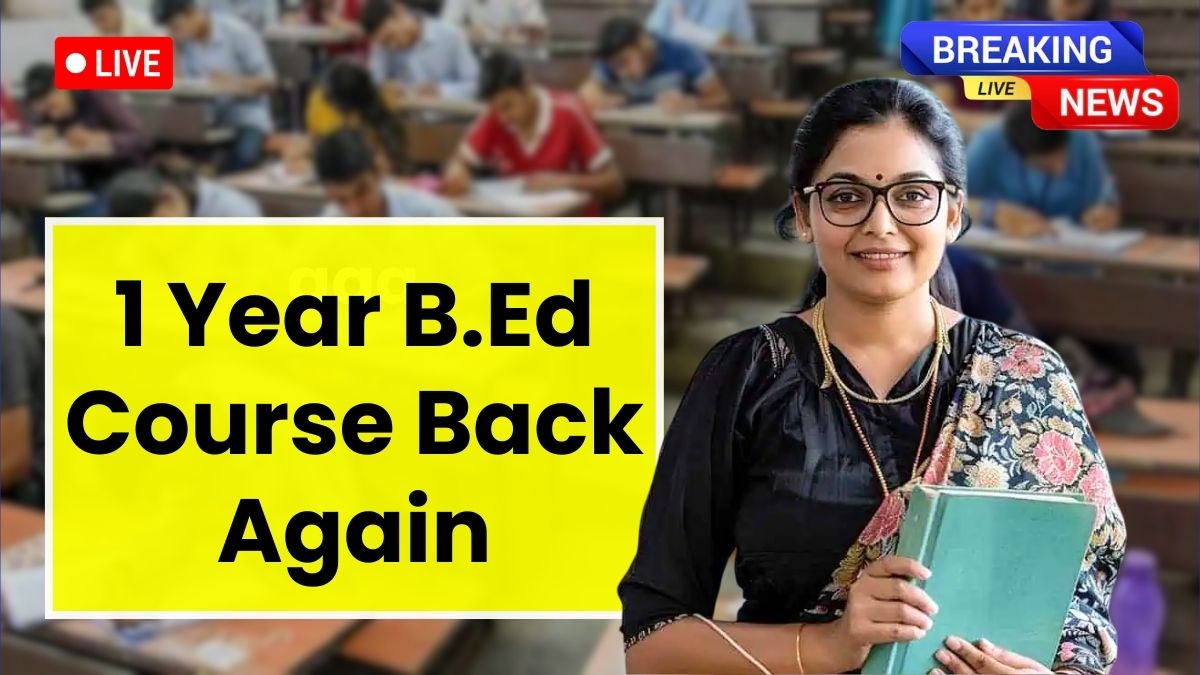
1 Year B.Ed Course : After almost a decade, the one-year B.Ed course is making a comeback, and for many aspiring teachers, this feels like a second chance at their dream career. Earlier, the two-year B.Ed program required more time, more money, and often forced students to delay their plans. Now, with the return of the one-year format, becoming a trained teacher could be faster, more affordable, and more practical. This move aligns with the spirit of the National Education Policy (NEP) 2020, which focuses on flexibility, skill-based learning, and modern teaching methods. For graduates who want to start working sooner or who are already managing jobs or family responsibilities, this shorter course could be a game changer.
NEP 2020 and the Return of the One-Year B.Ed
The National Education Policy 2020 has brought major changes to India’s education system, including teacher training. Policymakers realized that the longer duration of the B.Ed course was discouraging many capable candidates from entering the teaching profession. To solve this, the one-year B.Ed course has been reintroduced for eligible graduates and postgraduates. The goal is to produce well-trained teachers in a shorter time without compromising on quality. The updated curriculum focuses on digital learning, inclusive classrooms, multilingual teaching, and value-based education. This ensures that future teachers are prepared for modern classrooms and changing student needs.
A Big Shift in the Teacher Training System
This is not just about reducing the course duration. The new one-year B.Ed program is designed to be more practical and classroom-focused. Trainees will spend more time in real school environments through internships and teaching practice. Modern teaching tools, technology integration, and classroom management skills are being emphasized. This approach aims to improve the overall quality of teaching in schools, especially in rural and underserved areas where trained teachers are still in short supply. By preparing teachers faster, the education system can respond more quickly to staffing needs.

Eligibility Criteria Made Simple
The eligibility rules for the one-year B.Ed course are designed to include a wider range of candidates. Students who have completed a four-year undergraduate degree in any subject can apply. Those who have a postgraduate degree are also eligible. Generally, candidates from the general category need at least 50 percent marks, while SC, ST, and OBC candidates may qualify with 45 percent. One of the biggest advantages is that there is no upper age limit, allowing even working professionals or career changers to join the teaching field. This flexibility encourages more people to consider teaching as a career.
Reservation and Special Support
As per government guidelines, reservation policies will continue to apply in admissions. Women candidates, persons with disabilities, and students from economically weaker sections may receive additional benefits or support. These measures aim to make the teaching profession more inclusive and representative of society. A diverse teacher workforce can better understand and connect with students from different backgrounds.
Affordable Fees Make It More Accessible
One of the most attractive parts of the revived one-year B.Ed course is the lower fee structure. Government colleges may charge between ₹15,000 and ₹25,000 for the full course, while private institutions might range from ₹20,000 to ₹30,000. Compared to earlier programs that cost much more over two years, this is a major relief for students from middle-class and rural families. Additional costs like books, exam fees, and internships are also expected to be manageable. Scholarships and government financial aid can reduce the burden even further.
यह भी पढ़े:
 Pension Calculation After 15 Years Service Explained for Employees EPFO Pension 2026 Update
Simple and Online Application Process
The admission process for the one-year B.Ed course is expected to be mostly online, making it easier for students across the country to apply. Candidates need to visit the official website of the university or college offering the course, read the notification carefully, and check their eligibility. After filling out the online form, they must upload required documents such as mark sheets, ID proof, and photographs. An application fee is usually paid online. Selection may be based on merit or an entrance exam, followed by counseling for college allotment.
Course Structure and Practical Training
The one-year B.Ed course is divided into theoretical learning and practical training. In the first phase, students learn about education theory, child psychology, inclusive education, and modern teaching strategies. In the second phase, they undergo school internships where they get real classroom teaching experience. They also learn how to use digital tools, evaluate students, and manage classrooms effectively. This balanced structure ensures that teachers are not just qualified on paper but also confident in real teaching situations.
Career Opportunities After the Course
After completing the one-year B.Ed, graduates can appear for Teacher Eligibility Tests (TET) to apply for government school jobs. Opportunities are also available in private schools, coaching centers, and online education platforms. Starting salaries may range from ₹30,000 to ₹50,000 per month depending on the institution and location, and this can grow with experience. Those interested in further studies can pursue M.Ed or move into education research and administration. The course opens multiple paths within the education sector.
यह भी पढ़े:
 Big Relief for Elderly Citizens as Government Introduces New Senior Citizen Card Benefits
Conclusion
The return of the one-year B.Ed course is a positive step for both aspiring teachers and the education system. It reduces time and financial pressure while focusing on practical skills and modern teaching needs. For many young people, this could be the perfect opportunity to build a stable and meaningful career. Teaching is not just a job; it shapes the future of society. With this new format, the journey to becoming a teacher is now more accessible than ever.
Disclaimer: This article is for general informational purposes only and is based on current discussions and policy directions related to teacher education. Course structure, eligibility, fees, and admission processes may vary depending on university regulations and official government notifications. Readers are advised to verify details through authorized educational institutions or regulatory bodies before applying.