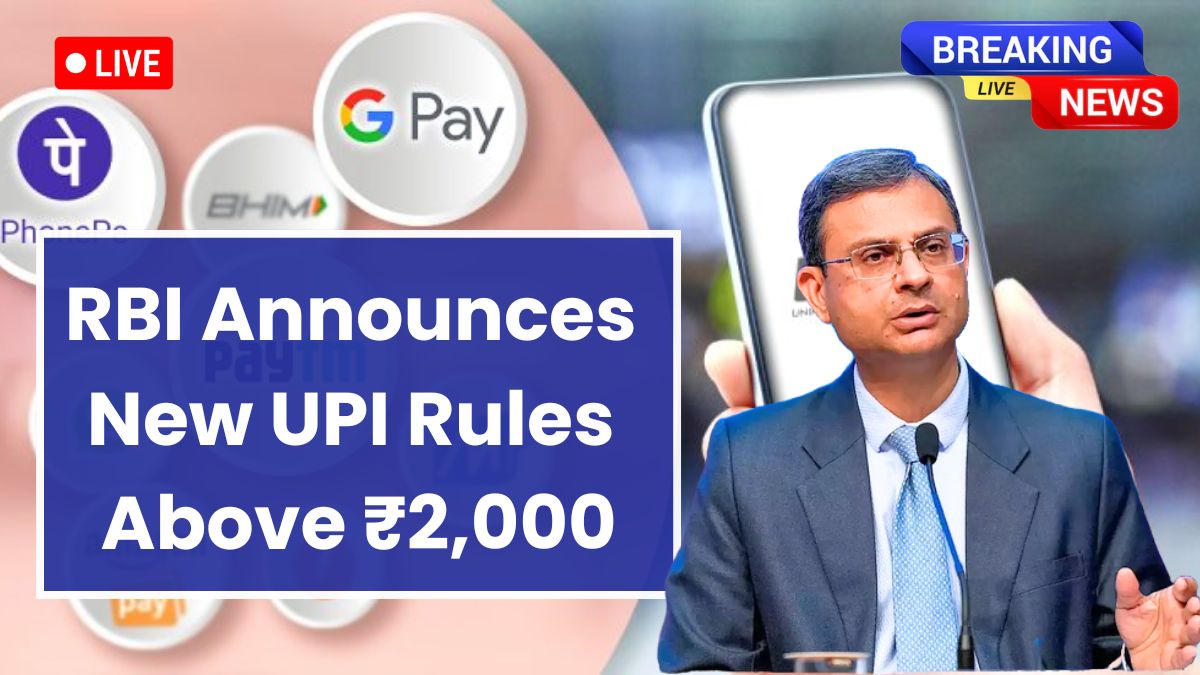
New UPI Rule Changes 2026 : UPI has become a part of daily life in India. Whether it’s paying for tea, shopping online, or sending money to family, everything happens in seconds with just a phone and a PIN. But as digital payments grow, so do risks like fraud and misuse. That’s why new UPI rules coming in April 2026 will focus especially on payments above ₹2,000. The goal is simple: keep transactions safe while making the system stronger and more reliable for everyone.
Extra Security for Larger Payments
One of the biggest changes is stronger security for payments above ₹2,000. Right now, most UPI payments only need your UPI PIN. Under the new rules, bigger transfers will need an extra verification step. This could be an OTP sent to your phone, a fingerprint scan, facial recognition, or device confirmation. The idea is to make sure that even if someone gets access to your phone or PIN, they still can’t easily move large amounts of money.
Smarter Daily Transaction Limits
The overall daily UPI limit for most users will still stay at ₹1,00,000. However, special categories like education fees, hospital bills, and government payments may allow transactions up to ₹5,00,000 per day. Payments above ₹2,000 will also be watched more closely by the system to spot unusual patterns. This helps stop fraud while still allowing genuine high-value payments when needed. It’s a mix of flexibility for users and control for safety.

New Rules for Merchant QR Codes
Merchants will also see some important changes. Businesses with higher turnover will need to use QR codes linked to their GST details. This means that when you scan and pay, the payment goes to a verified business account. For customers, this reduces the chances of fake QR code scams. For the government, it improves tax compliance and transparency. Payments above ₹2,000 made to such merchants will automatically be part of this more structured tracking system.
How Local Businesses May Feel the Change
Small shopkeepers and service providers might feel that these changes slow things down at first. Extra authentication for higher payments can add a few seconds to each transaction. But over time, this could actually help them. Safer payments mean fewer disputes, fewer chargebacks, and less risk of fraud. Customers may also feel more confident making bigger digital payments, which can help businesses grow in the long run.
What It Means for Everyday Users
For most daily spending, nothing much will change. Buying vegetables, paying for a cab, or splitting a lunch bill under ₹2,000 will still be quick and easy. The difference will show up when you make bigger payments like rent, travel bookings, or sending large amounts to family. You’ll see an extra step for verification. It may take a few more seconds, but it adds an important layer of protection for your money.
यह भी पढ़े:
 Pension Calculation After 15 Years Service Explained for Employees EPFO Pension 2026 Update
Banks and UPI Apps Will Get Smarter
Banks and payment apps will be responsible for making these changes work smoothly. You can expect app updates with new security prompts and more options like biometrics. Many apps may also use AI to track unusual spending patterns. For example, if you suddenly try to send a large amount to a new account late at night, the system may flag it or ask for extra confirmation. This kind of smart monitoring can stop fraud before it happens.
Focus on Transparency and Digital Records
Another big focus of the new rules is transparency. Payments above ₹2,000, especially to businesses, will generate clearer digital records. These records may link with GST systems for merchants. For users, this means better transaction history and easier expense tracking. For the system as a whole, it helps reduce tax evasion and builds more trust in digital payments. Digital money becomes not just fast, but also more accountable.
Preparing for the Future of UPI
These 2026 changes are just one step in UPI’s long journey. Regulators and payment companies are already working on future features like advanced fraud detection, more biometric options, and even international UPI payments. The focus is shifting from just growing the number of users to making the system safer and more stable. India wants UPI to be not only popular, but also one of the most secure payment networks in the world.
यह भी पढ़े:
 Big Relief for Elderly Citizens as Government Introduces New Senior Citizen Card Benefits
What Experts Think About These Changes
Many industry experts believe these rules are necessary as digital payments become bigger and more common. While there may be small inconveniences at first, most agree that better security is worth it. Reducing fraud, improving compliance, and building trust are key for long-term growth. Experts also feel that once users get used to the extra steps, they will see it as normal, just like entering a PIN feels normal today.
Real-Life Examples Under the New Rules
Think about paying ₹25,000 in school fees through UPI. With the new rules, your app may ask for your PIN plus an OTP or biometric check. Or imagine booking a holiday package worth ₹50,000. Again, you’ll see extra verification before the payment goes through. But if you’re just paying ₹300 for groceries or ₹800 for a cab ride, the process will remain the same. The system adjusts security based on how much money is involved.
Stronger Push Toward Digital India
These rule changes are part of a bigger plan to make India more digitally connected and financially secure. By making digital payments safer, the government and regulators want more people to trust and use UPI. This helps reduce cash usage, supports financial inclusion, and strengthens India’s image as a global fintech leader. Safer systems encourage more adoption, which benefits both users and businesses.

Final Thoughts on UPI Rule Changes 2026
The new UPI rules for payments above ₹2,000 are mainly about adding safety without removing convenience. Yes, you may need to take an extra step for larger transactions, but that step is designed to protect your money. With better verification, smarter limits, and more transparent systems, UPI is moving toward a future that is not only fast, but also secure and trustworthy for everyone.
Disclaimer:
This article is for general informational purposes only and is based on publicly discussed regulatory directions and expected digital payment trends. Actual UPI rules, limits, and security requirements may differ when officially implemented by NPCI, RBI, or your bank. Users and businesses should always check updates from official banking apps, government notifications, or financial institutions before making payment decisions or relying on specific transaction guidelines.